What Is a 3-Way Electric Control Valve? Structure, Working Principle, and Practical Applications
A 3-way electric control valve is an automatic control valve operated by an electric actuator. It is designed with three ports to regulate, mix, or divert the flow of liquids, gases, or steam within a pipeline system.
This type of valve is widely used in HVAC systems, industrial automation, water treatment, chemical processing, and energy systems due to its precise control capability and high automation performance.
What Is a 3-Way Electric Control Valve?
A 3-way electric control valve is a type of valve equipped with an electric actuator, allowing the valve opening and closing position to be adjusted based on control signals from the system. With its three-port design, the valve can perform two main functions: mixing flows or diverting fluid flow within a pipeline system.
Unlike traditional mechanical valves, electric control valves operate fully automatically through signals such as 4–20mA, 0–10V, or digital signals from PLC and DCS systems. This helps the system operate more stably, reduces dependence on manual operation, and improves control accuracy during operation.
In practice, this type of valve is commonly used in systems requiring continuous control of temperature, pressure, or flow rate, especially in industrial environments with high accuracy requirements.
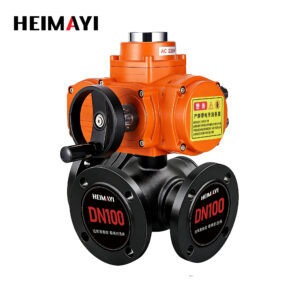
3-Way Electric Control Valve
Working Principle of a 3-Way Electric Control Valve
The valve operates based on a mechanism that controls the position of the valve stem through an electric motor integrated into the actuator. When receiving a control signal from the system, the actuator rotates the valve stem to a specific angle, thereby changing the position of the valve disc inside the valve body.
This process allows precise adjustment of the flow rate passing through each branch. For example, in mixing mode, the valve regulates two incoming fluid streams to combine them at the desired ratio before exiting through the remaining port. Conversely, in diverting mode, the valve splits one incoming flow into two different directions according to operational requirements.
Thanks to this mechanism, the valve can operate continuously and stably in automation systems where real-time flow control is critical.
Types of 3-Way Electric Control Valves
Based on their functions, 3-way electric control valves are generally divided into two main types, each designed for specific applications within a system.
🔹 Mixing Valve
A mixing valve has two inlet ports and one outlet port, allowing two fluid streams to be combined into a single output flow. This type is commonly used in systems requiring temperature control, such as mixing hot and cold water in HVAC or heating systems.
Thanks to its precise mixing ratio adjustment capability, the valve helps maintain stable temperatures and prevents fluctuations that could affect system operation.
🔹 Diverter Valve
In contrast, a diverter valve has one inlet port and two outlet ports, allowing the flow to be directed into different branches. This type is commonly used in systems that require changing the flow direction, such as switching between pipelines or distributing flow to different areas.
Using a diverter valve makes the system more flexible in operation without the need to install multiple separate valves.
Key Advantages of 3-Way Electric Control Valves
🔹 Precise and Stable Control
One of the greatest advantages of a 3-way electric control valve is its ability to regulate flow with high accuracy. By using continuous control signals, the valve can adjust its position smoothly, ensuring stable flow control throughout system operation.
🔹 Optimized Piping System
Using a 3-way valve helps reduce the number of devices required in the system, thereby simplifying pipeline design. Instead of using multiple 2-way valves to perform the same function, a single 3-way valve can meet the operational requirements.
This not only helps reduce costs but also minimizes leakage risks and makes maintenance easier.
🔹 Durable Operation and Long Service Life
The valve is commonly manufactured from materials such as carbon steel or stainless steel, offering excellent resistance to high pressure and temperature. In addition, the electric actuator is designed for long-term stable operation, making it suitable for continuous-duty systems.
🔹 Easy Integration with Automation Systems
The valve supports various signal standards such as 4–20mA, RS485, Modbus, and HART, allowing easy integration with control systems like PLC, SCADA, and DCS. This enables remote monitoring and control, improving overall system management efficiency.
Basic Technical Specifications
Some common specifications of 3-way electric control valves include:
- Size: DN15 – DN300
- Working pressure: PN16, PN25, PN40, PN64
- Power supply: AC 220V or DC 24V
- Control signal: 4–20mA, 0–10V
- Communication protocols: Modbus, HART
- Protection class: IP65 to IP68
- Body materials: carbon steel, stainless steel
Practical Applications
3-way electric control valves are widely used in many industrial fields:
- Water treatment: regulating and distributing water flow in systems
- Energy industry: controlling steam and thermal flow
- Chemical industry: solution mixing and reaction control
- HVAC systems: temperature regulation in air conditioning systems
- Food & pharmaceutical industries: precise control of clean liquid flow
When Should You Use a 3-Way Electric Control Valve?
You should choose this type of valve when the system requires:
- Mixing or diverting fluid flow
- Automatic control based on signals
- Precise flow regulation
- Optimized pipeline design
In complex systems, using a 3-way valve can significantly reduce the number of installed devices and improve operational efficiency.
Reference
The working principle of control valves is widely applied in industry. You can learn more here: https://en.wikipedia.org/wiki/Control_valve
Conclusion
A 3-way electric control valve is an effective solution for systems requiring flexible and accurate flow control. With automatic operation, high durability, and easy integration into control systems, this device is becoming increasingly popular across various industries.